Introduction
A Nile journey is one of the most memorable ways to discover ancient Egypt. You can sail between Luxor and Aswan, visit remarkable temples, enjoy river views, and experience the history of the Nile Valley.
However, not every Nile journey offers the same experience. Some travelers prefer a traditional sailing boat with a small number of guests. Others enjoy the facilities and entertainment available on a larger cruise ship.
This is where the choice between a Dahabiya vs. Nile Cruise becomes important. Both options offer a wonderful way to explore Upper Egypt, but they differ in atmosphere, size, facilities, and travel style.
In this guide, we compare both experiences to help you choose the right Nile journey for your holiday.
What Is a Dahabiya Nile Cruise?
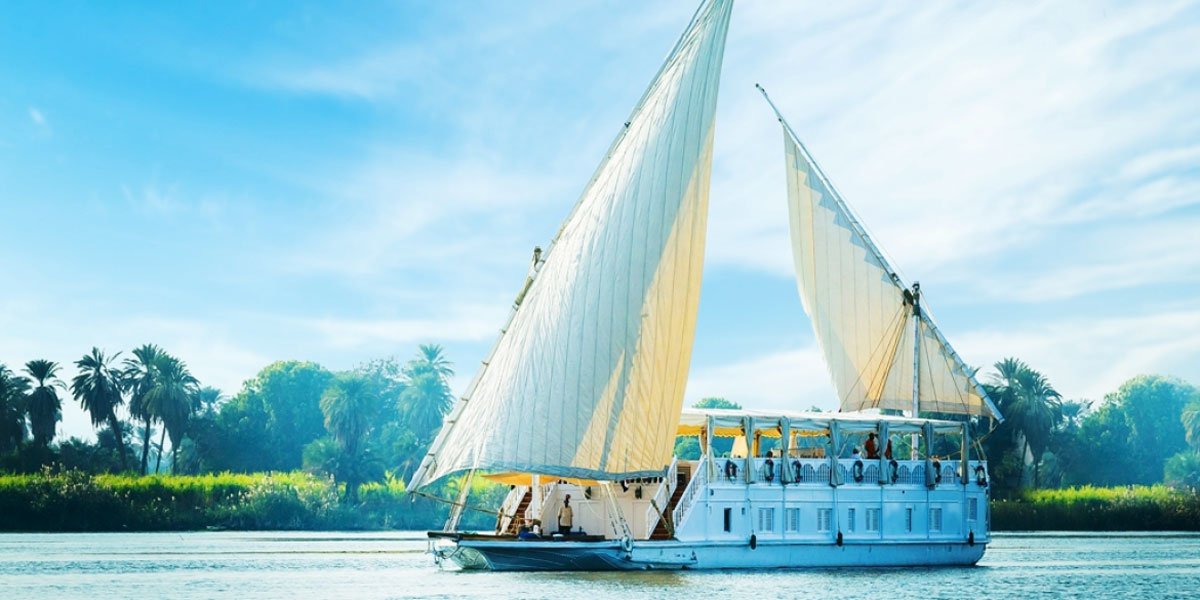
A Dahabiya is a traditional sailing boat designed for a more intimate journey along the Nile. Modern Dahabiyas often combine traditional Egyptian-inspired design with comfortable cabins, inviting decks, and personalized service.
These boats usually carry fewer guests than large cruise ships. As a result, the atmosphere can feel quieter and more personal.
A Dahabiya journey may include visits to famous temples, smaller riverside locations, and villages along the Nile. Some itineraries also allow time to relax on deck while the boat moves through the countryside.
Dahabiyas generally rely on sails when wind conditions allow. They may also use a tugboat or auxiliary engine when needed, depending on the vessel and conditions.
This style of travel suits visitors who value privacy, scenery, and a slower pace.
What Is a Traditional Nile Cruise?
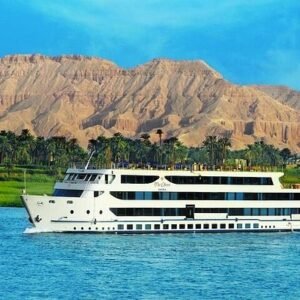
A traditional Nile cruise usually refers to a larger cruise ship sailing between Luxor and Aswan. These vessels offer more cabins and a wider range of onboard facilities.
Depending on the ship, amenities may include a restaurant, lounge, swimming pool, sun deck, bar, and entertainment area. Some ships also provide evening shows and organized onboard activities.
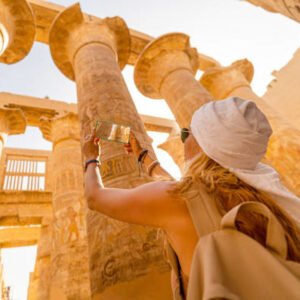
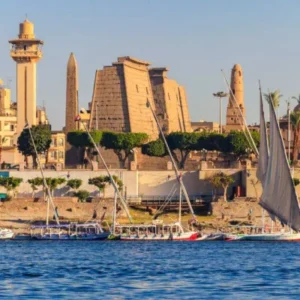
A typical itinerary includes guided visits to major archaeological sites. These may include Karnak Temple, Luxor Temple, the Valley of the Kings, Edfu Temple, Kom Ombo Temple, and Philae Temple.
The exact schedule depends on the cruise package, sailing direction, and number of nights.
A larger Nile cruise suits travelers who want sightseeing combined with hotel-style facilities and a structured schedule.
Dahabiya vs. Nile Cruise: Main Differences
The main difference is the overall travel experience. A Dahabiya focuses on intimacy and a relaxed atmosphere, while a larger Nile cruise offers more facilities and a social onboard environment.
| Feature | Dahabiya | Traditional Nile Cruise |
|---|---|---|
| Boat size | Smaller sailing vessel | Larger cruise ship |
| Atmosphere | Quiet and intimate | More social and lively |
| Number of guests | Usually fewer guests | Usually more guests |
| Onboard facilities | Vary by boat; often more limited | Often includes more shared facilities |
| Sailing style | Traditional sailing when conditions allow | Usually motor-powered |
| Itinerary | May include flexible or less-visited stops | Usually follows a structured sightseeing schedule |
| Dining | Often a more intimate dining experience | Usually a restaurant with scheduled meals |
| Entertainment | Generally quieter | May include organized evening entertainment |
| Privacy | Often more personal | Depends on cabin and ship |
| Price | Can be higher per person | Wider range of prices and packages |
| Best suited to | Couples, small groups, and slow travelers | Families, groups, and travelers seeking more facilities |
Important: Facilities, prices, stops, and service levels vary between operators. Always compare the details of the specific boats and packages you are considering.
1. Comfort and Onboard Facilities
Comfort is an important factor when choosing your Nile journey.
Comfort on a Dahabiya
Dahabiyas offer a more intimate setting. Many have stylish cabins, comfortable lounges, and open decks where guests can enjoy the scenery.
The onboard facilities depend on the vessel. Some provide elegant interiors and premium service, while others offer a simpler experience.
Because the boats are smaller, they may have fewer shared facilities than a large cruise ship. A swimming pool, for example, is not available on every Dahabiya.
Comfort on a Traditional Nile Cruise
Larger cruise ships generally provide more hotel-style facilities. Depending on the ship, you may find a swimming pool, restaurant, lounge, sun deck, and entertainment spaces.
These facilities can make longer journeys more comfortable, especially for travelers who enjoy spending time onboard between excursions.
Which should you choose?
Choose a Dahabiya if you prefer a smaller setting and an intimate atmosphere. Choose a larger cruise ship if onboard facilities are a priority.
2. Privacy and Atmosphere
The atmosphere can shape your entire holiday.
A Dahabiya usually carries fewer passengers. This creates more opportunities to enjoy quiet moments on deck, admire the river, and spend time with your travel companions.
The experience may feel especially appealing to couples celebrating an anniversary or honeymoon. It can also suit families or friends who prefer a smaller group environment.
A traditional Nile cruise has a more social atmosphere. You may meet travelers from different countries during meals, sightseeing trips, and evening activities.
Neither option is automatically better. The right choice depends on whether you prefer quiet surroundings or a more active onboard environment.
3. Itinerary and Sightseeing
Both Dahabiyas and larger Nile cruise ships can introduce you to the history of Upper Egypt. However, their routes and schedules may differ.
Typical Nile Cruise Highlights
A conventional cruise itinerary may include:
- Karnak Temple and Luxor Temple
- The Valley of the Kings
- Hatshepsut Temple
- Edfu Temple
- Kom Ombo Temple
- Philae Temple and other Aswan highlights, depending on the package
Many cruises follow a planned schedule, with guided excursions arranged around sailing times.
Typical Dahabiya Highlights
Dahabiya itineraries may include some of the same major sites. Depending on the route, they can also feature smaller riverside stops, villages, or quieter locations.
The experience often emphasizes the journey itself, including views of fields, palm trees, islands, and traditional settlements along the Nile.
However, not every Dahabiya visits the same places. Some routes follow a similar sightseeing plan to larger ships, while others include different stops.
Before booking, compare the full itinerary rather than relying only on the boat category.
4. Sailing Experience and Time on the Nile
The way you experience the river is one of the biggest differences between these journeys.
A Dahabiya can offer a traditional sailing atmosphere. When wind conditions are suitable, you may enjoy the sight of the sails catching the breeze as the boat travels past the Nile’s green banks.
The slower pace can create more opportunities for photography, reading, and simply watching life along the river.
Larger cruise ships usually depend on engines for movement. They offer a different perspective, with larger decks and more shared spaces from which to enjoy the scenery.
If the feeling of a traditional sailing journey is important to you, a Dahabiya may suit your preferences. If you prefer a larger vessel with more facilities, a conventional cruise may be a better fit.
5. Food and Dining
Dining is another part of the experience worth comparing.
On a Dahabiya, meals may be served in a smaller dining area or on deck, depending on the boat and weather. The atmosphere can feel personal, and some operators emphasize freshly prepared meals.
Larger cruise ships usually have a dedicated restaurant and scheduled meal services. Menus and dining arrangements vary, but the experience may offer more space and a wider selection of shared dining facilities.
If you have dietary requirements, inform the operator before booking. Ask about vegetarian meals, allergies, children’s meals, and whether drinks are included in the package price.
Do not assume that every Dahabiya offers the same menu or that every large cruise ship provides the same dining standard.
6. Price and Value for Money
The cost of a Nile journey depends on several factors. These include the boat, cabin category, season, number of nights, meals, excursions, guide services, and transfers.
A Dahabiya may cost more per person than a standard cruise because it accommodates fewer guests and may provide a more personalized service. However, prices vary considerably between vessels and packages.
Traditional Nile cruises offer a broad range of options, from basic packages to luxury ships. This makes it possible to compare different comfort levels and budgets.
When comparing prices, check what is included.
Look for these details:
- Accommodation and cabin category
- Meals and drinks
- Guided excursions
- Entrance fees to archaeological sites
- Transfers to and from the boat
- Optional tours and special experiences
- Tips and other additional charges
The cheapest package is not always the best value. Compare the full itinerary and inclusions before making your decision.
7. Which Option Is Better for Couples and Honeymooners?
Both options can suit couples, but they offer different atmospheres.
A Dahabiya may appeal to couples who want a quieter journey, scenic sailing, and a more intimate setting. Private moments on deck and smaller guest numbers can create a relaxed environment for a romantic holiday.
A luxury Nile cruise may be more suitable for couples who want a range of facilities, a larger cabin selection, and organized evening entertainment.
If you are planning a honeymoon, ask about cabin privacy, deck arrangements, dining options, and special services. Some boats may offer romantic arrangements, but these should be confirmed directly with the operator.
8. Which Option Is Better for Families?
Families should consider cabin arrangements, onboard facilities, the itinerary, and the ages of their children.
A larger cruise ship may offer more space and facilities for families. Some ships have swimming pools and shared areas where children can relax between excursions.
A Dahabiya may suit families who value a smaller group environment. However, its facilities and cabin layouts may be more limited.
Before booking, ask about child-friendly meals, cabin capacity, safety arrangements, and whether the sightseeing schedule is suitable for your family.
For both options, remember that temple visits can involve walking on uneven surfaces and spending time outdoors in the heat.
9. How Many Nights Should You Choose?
The length of your Nile journey affects how much you can see and how relaxed the trip feels.
3 Nights / 4 Days
A shorter cruise can suit travelers with limited time. It usually focuses on key sites along the Luxor–Aswan route, depending on the sailing direction and package.
4 Nights / 5 Days
This is a popular length for exploring several major sites while allowing time to enjoy the river journey. Exact itineraries vary by operator and departure day.
5 Nights or Longer
A longer journey may offer a more relaxed pace or additional experiences, depending on the route. Some travelers also choose to combine their cruise with extra nights in Luxor or Aswan.
Dahabiya departure schedules can differ from conventional cruise schedules. Confirm the sailing dates, boarding time, and full itinerary before booking flights or hotel stays.
10. Can You Visit Abu Simbel During a Nile Cruise?
Yes, Abu Simbel can often be added to a Nile holiday, but it is not automatically included in every cruise package.
The temples are located south of Aswan, away from the usual river route between Luxor and Aswan. Many travelers arrange a separate excursion from Aswan by road or air, depending on availability and their schedule.
If Abu Simbel is a priority, check whether the cruise operator offers the excursion or whether you need to book it separately.
Also, allow enough time for transfers and confirm the departure arrangements before finalizing your travel plans.
Dahabiya vs. Nile Cruise: Which One Should You Choose?
The right journey depends on your priorities, travel style, and budget.
A Dahabiya may suit you if you:
- Prefer a smaller boat and a quieter atmosphere.
- Enjoy traditional sailing and scenic river views.
- Value a more intimate dining experience.
- Are traveling as a couple or in a small group.
- Want an itinerary that may include less-visited stops.
A traditional Nile cruise may suit you if you:
- Prefer more onboard facilities.
- Enjoy meeting other travelers.
- Want a structured sightseeing schedule.
- Are traveling with family or a larger group.
- Want to compare packages across different price levels.
Before making a final decision, compare the actual boats, cabin photos, guest capacity, itinerary, and inclusions. The quality of the individual operator matters as much as the type of vessel.
Practical Tips Before Booking Your Nile Journey
Keep these points in mind when planning your trip:
- Compare the full itinerary: Check which temples and excursions are included.
- Confirm the sailing dates: Departure schedules vary between operators.
- Check cabin details: Ask about cabin size, windows, air conditioning, and bathroom facilities.
- Review meal arrangements: Confirm which meals and drinks are included.
- Ask about transfers: Make sure you understand how you will reach the boat.
- Check entrance fees: Some packages include sightseeing tickets, while others charge separately.
- Plan for the weather: Bring sun protection, comfortable walking shoes, and light clothing.
- Book extra excursions early: Trips such as Abu Simbel may require separate arrangements.
These details can help you avoid unexpected costs and choose a journey that matches your expectations.
Frequently Asked Questions
Is a Dahabiya better than a Nile cruise?
Neither option is best for every traveler. A Dahabiya offers a smaller, more intimate sailing experience, while a traditional Nile cruise generally provides more shared facilities and a larger social environment. Your choice depends on your preferences and budget.
Is a Dahabiya more expensive than a Nile cruise?
A Dahabiya can cost more per person than a standard cruise ship, but prices depend on the vessel, season, cabin, and package inclusions. Compare complete itineraries and services before deciding.
Do Dahabiyas have air conditioning?
Many modern Dahabiyas offer air-conditioned cabins, but facilities vary. Confirm air conditioning, bathroom arrangements, and other amenities with the operator before booking.
Do Dahabiyas sail with the wind?
Dahabiyas are traditional sailing vessels, but wind conditions affect sailing. Some may use a tugboat or auxiliary engine when necessary. Ask the operator how the specific vessel operates.
Can I visit the Valley of the Kings on a Dahabiya trip?
Some Dahabiya packages include Luxor sightseeing, while others require separate tours before or after sailing. Check whether the Valley of the Kings, Karnak Temple, and other Luxor sites are included.
Which Nile journey is more romantic?
A Dahabiya may appeal to couples who prefer a quiet and intimate atmosphere. A luxury cruise may suit couples who enjoy more onboard facilities and organized entertainment. The boat, cabin, and service quality also make a difference.
How do I choose a reliable Nile cruise operator?
Review the itinerary, cabin details, recent guest feedback, safety arrangements, and what the price includes. Confirm the booking terms in writing and ask questions before paying.
Final Thoughts
Choosing between a Dahabiya and a traditional Nile cruise is about deciding how you want to experience the Nile.
A Dahabiya offers a smaller-scale journey with a traditional sailing atmosphere and a focus on quiet moments along the river. A larger cruise ship provides more shared facilities and a structured setting for exploring the temples of Upper Egypt.
Both options can bring you closer to Egypt’s history and landscapes. Compare the vessel, itinerary, comfort level, and total price to find the journey that suits your travel style.
Whether you choose a traditional Dahabiya or a larger Nile cruise ship, the Nile can become one of the most memorable parts of your Egyptian holiday.